Breakers That Fail to Trip
A sticking trip mechanism can leave an overloaded circuit energized. The breaker handle may appear normal even though the wiring is no longer receiving dependable overcurrent protection.
Phoenix Electrical Panel Upgrades inspects and replaces older electrical panels across Phoenix, where breakers that fail to trip, overheating busbars, and hidden arcing can leave household wiring unprotected. These concerns matter even when the lights work normally. This guide explains the defects, warning signs, and replacement decisions for homes that still have their original equipment.
A sticking trip mechanism can leave an overloaded circuit energized. The breaker handle may appear normal even though the wiring is no longer receiving dependable overcurrent protection.
The busbar distributes power to the breakers. Loose stab-in contacts can lose connection pressure, creating localized heat and arcing that damage insulation.
Have an electrician identify the panel model, amperage, and condition. Document the findings and compare full replacement with any proposed breaker-only work before approving the scope.
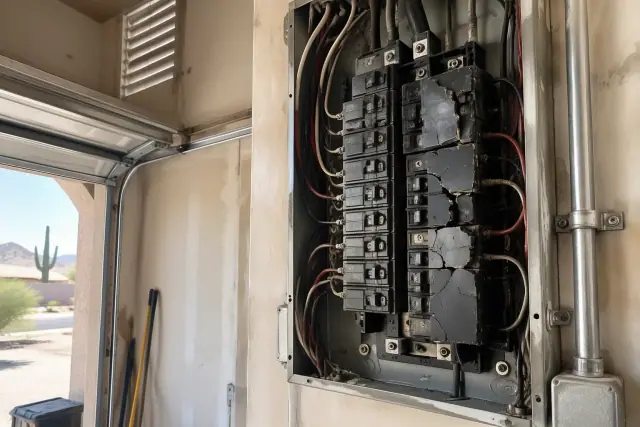
Cracked breaker housings are one defect found during panel inspections. Leave removal of the protective cover and examination of internal parts to an electrician.
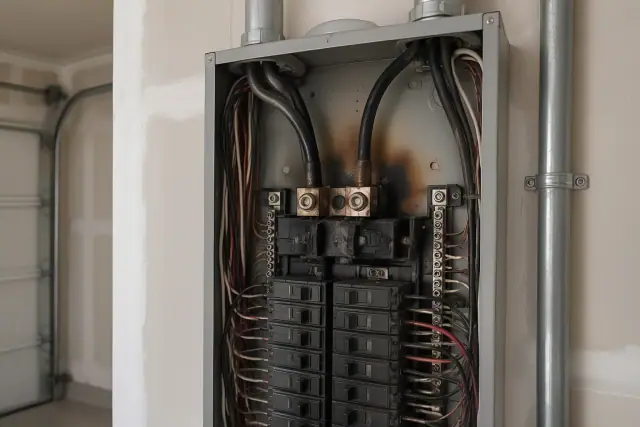
Discoloration and scorched breaker slots can reveal overheating at the connection. Internal arcing may remain hidden behind the protective cover.
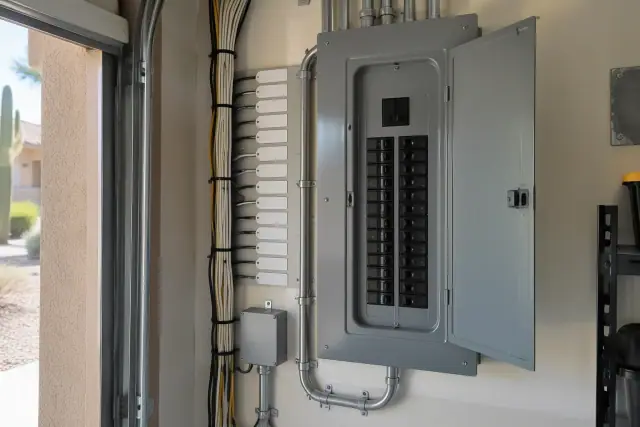
Circuit labeling and testing are part of the replacement process. Clear labels help the homeowner understand which circuits serve appliances and rooms.
Single-breaker work can run $550 to $2,100, while individual compatible breaker replacements are also quoted at $150 to $400 per breaker. Confirm the written scope; replacing a breaker does not renew the busbar or the rest of the panel.
A straightforward panel swap typically costs $1,500 to $4,000 and takes one day. The work includes removing the old panel, installing the replacement, and labeling and testing circuits.
A panel replacement with a 200 amp service upgrade typically runs $2,750 to $4,800. Moving from 100 to 200 amps is a separate capacity decision based on the household loads and planned equipment.
A full service upgrade with meter box work can cost $4,500 to $8,000 or more. This broader scope can take longer than a straightforward swap and should be itemized separately in the estimate.
| Issue or finding | Why it matters | next action |
|---|---|---|
| Breaker fails to trip | An overload can continue heating the circuit wiring. | Have an electrician evaluate the protection and replacement options; do not create an overload to test it. |
| Loose or discolored bus connections | Poor contact can create hot spots and internal arcing. | Leave internal inspection to an electrician and request documented findings. |
| Burning odor, buzzing, or a warm cover | These warning signs can indicate deterioration or overheating. | Seek prompt professional evaluation without opening the protective cover or handling breakers. |
| Breaker will not reset | The circuit fault or breaker condition needs diagnosis. | Do not force, bypass, or repeatedly reset the breaker. |
| No obvious symptoms | A normal appearance does not demonstrate reliable tripping. | Arrange an assessment of the panel model, age, condition, and replacement scope. |
A breaker should interrupt excessive current before wiring overheats. In these older panels, the trip mechanism and the breaker-to-bus connection are separate concerns: a breaker may fail to open, while a loose contact can create heat during use. Consumer Product Safety Commission testing confirmed calibration-test failures, but the agency closed its investigation without determining that the breakers were safe. A normal-looking panel face cannot establish how the internal components will perform under a fault. Tightening a connection or changing one breaker also does not resolve every age- or design-related concern.
Equipment manufactured from the mid-1950s through the late 1980s is well into its service life; the general residential-panel lifespan cited for comparison is 25 to 40 years. Phoenix summer heat above 110 degrees adds thermal stress to aging components. Older 100 amp panels are common in homes built before 1975, while a 200 amp rating does not eliminate breaker defects. An electrician should distinguish breaker panels from older fuse-style equipment and review maintenance records, HVAC loads, and planned EV charging or subpanel needs. Broad Phoenix replacement costs typically run $1,800 to $4,500, with the specific service and meter scope explaining the wider ranges above. Confirm labor, materials, permits, and the inspection schedule in the written quote.
Does the lack of a recall mean the panel is safe? No; recall status does not establish the condition or performance of your equipment. Can an individual breaker fix the problem? It may address that component, but it does not resolve the condition of the busbar or remaining breakers. Will insurance or a home sale be affected? Carrier requirements vary, and an inspection report or replacement may be requested; buyers may also ask for replacement or a credit. Does replacement always require more amperage? No; a same-amperage swap and a capacity upgrade are different scopes. Have the electrician explain which scope fits the home and document the findings for your insurer or buyer.
Share the home age, any existing inspection report, and the symptoms you have noticed. Phoenix Electrical Panel Upgrades evaluates older panels in neighborhoods including Encanto-Palmcroft, Willo Historic District, and Arcadia, and provides documentation and itemized replacement quotes. Confirm the panel scope and required local inspection before work begins.