Proudly serving Phoenix, Scottsdale, Mesa, Glendale, Chandler, Tempe & surrounding areasCall or Text 24/7: 480-210-5203
Wide drone view of suburban neighborhoods with red tile roofs and desert landscaping in Phoenix, AZ.

400 Amp Service Upgrades in Phoenix, AZ for High-Demand Properties & Equipment

Phoenix Electrical Panel Upgrades provides 400 amp service upgrades for homes and businesses in Phoenix, AZ. We also handle 200 amp upgrades, subpanel installation, and electrical meter box replacement. We assess your existing service and planned equipment before recommending the capacity your property needs. Whether you are adding EV charging, a casita, or another air conditioning unit, we plan the upgrade around those loads.

Phoenix homes built before 1985 may still rely on 100 or 150 amp panels while supporting demanding summer cooling loads. Pool equipment, electric appliances, and additions can put further pressure on that service. Our crews coordinate meter and service entrance work with Arizona Public Service or Salt River Project and arrange permits through the applicable local jurisdiction. Contact us for a property assessment and a clear explanation of the work before installation begins.

Our electricians are licensed through the Arizona Registrar of Contractors. The assessment covers the service entrance, meter enclosure, grounding, and planned circuits so the quote reflects the equipment and work involved.

Phoenix Electrical Panel Upgrades provides 400 amp service upgrades in Phoenix, Scottsdale, Tempe, Mesa, Chandler, Glendale, and the broader Valley of the Sun.

★ ★ ★ ★ ★4.9/5 Customer Satisfaction · 29 Years of Electrical Experience · 2,000+ Electrical Projects Completed · Licensed, Bonded & Fully Insured · Serving Homes & Businesses Valleywide

400 Amp Service Capacity & Benefits

What Does a 400 Amp Service Upgrade Include?

A service upgrade increases the electrical capacity available to your property. It typically involves the meter socket, service entrance conductors, main disconnect, panel equipment, grounding electrode conductor, and bonding connections.

The panel arrangement may use a single 400 amp main breaker unit or a dual 200/200 amp split configuration. We review the utility requirements, available wall space, equipment availability, and future circuit needs before selecting the arrangement.

Capacity planning starts with the equipment you expect to run, such as a 5-ton AC condenser, pool heater, electric range, and Level 2 EV charger. A load calculation determines whether your existing service can support that combination or whether an upgrade is appropriate.

Capacity for Major Electrical Additions

A larger service can accommodate planned loads while bringing the service entrance and grounding work into the same project. The benefits depend on your existing equipment and the improvements you intend to make.

  • Plan capacity for multiple EV chargers.
  • Account for dual-zone HVAC and additional cooling equipment.
  • Include pool pumps and electric pool heaters in the load calculation.
  • Allow for a guest casita or detached ADU.
  • Assess workshop tools alongside household demand.
  • Plan for electric ranges and heat pump water heaters.
  • Evaluate service needs before adding solar with battery backup.
  • Combine an outdated panel replacement with a needed capacity upgrade.
Panel and Service Entrance Work

Electrical Upgrade Services

We review the panel, incoming service, and planned circuits together. Alongside 400 amp upgrades, our work includes smaller service upgrades, subpanels, breaker repairs, legacy panel replacement, meter box replacement, surge protection, and commercial panel upgrades.

400 Amp Service Upgrades

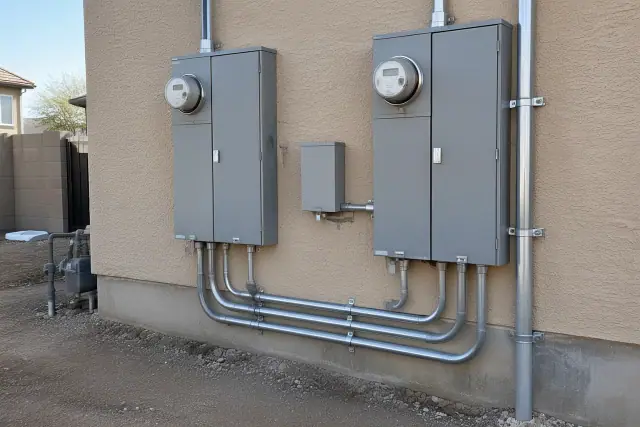
400 amp service upgrade on an exterior masonry wall with a utility meter and overhead conduit in Phoenix, AZ.

We plan and install the service entrance conductors, meter enclosure, disconnect, and panel arrangement needed for a 400 amp upgrade. Residential projects typically start around $5,800 and run to $14,000 or more, depending on the service entrance condition, riser length, and any overhead-to-underground rerouting.

Request Estimate

200 Amp Service Upgrades

Contractor progress photo of a 200 to 400 amp service upgrade on a stucco exterior in Phoenix, AZ.

A 200 amp service can remain suitable for many standard single-family homes under 3,000 square feet without heavy electrification, subject to a load calculation. A standalone 200 amp panel swap generally runs $2,400 to $3,800 in Phoenix and can often be completed in a single day; a larger service project requires its own assessment.

Request Estimate

Subpanel Installation

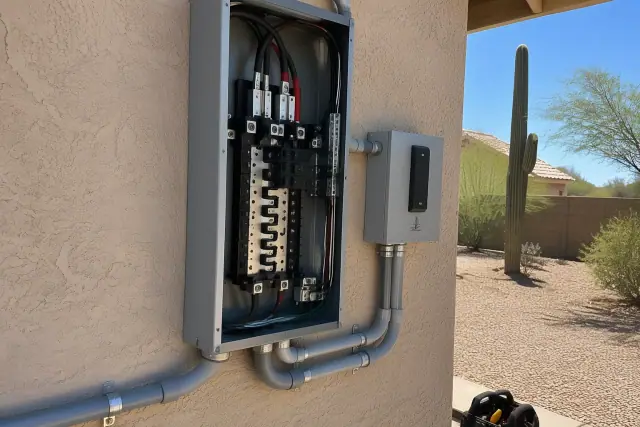
Subpanel installation for 400 amp service upgrade on a stucco wall in Phoenix, AZ.

A workshop, casita, or addition may need a subpanel to serve its circuits. We assess those circuits as part of the property load calculation and consider whether the existing incoming service can support the additional demand.

Request Estimate

Circuit Breaker Repair and Surge Protection

Contractor photo of a 400 Amp service upgrade and surge protection in Phoenix, AZ.

We provide circuit breaker repair and replacement and evaluate tripping alongside the loads connected to the panel. Whole house surge protector installation can also be included at the new panel; we discuss that scope during the upgrade assessment.

Request Estimate

Fuse Box and Legacy Panel Replacement

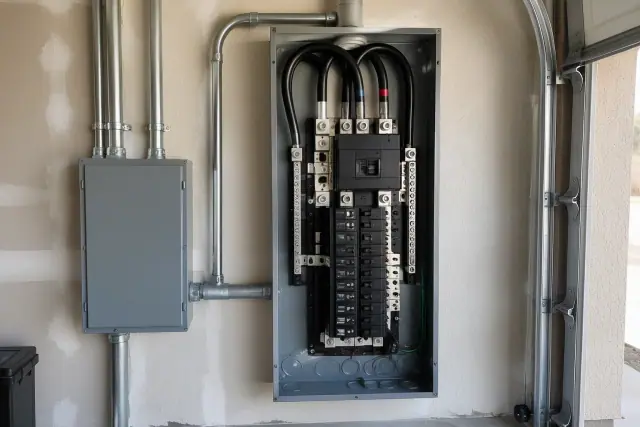
Fuse box and 400 amp service upgrade in Phoenix, AZ, showing a gray steel breaker cabinet on a garage drywall partition.

We replace Federal Pacific and Zinsco panels and convert older fuse boxes. When a capacity upgrade is also needed, combining the work can reduce overlapping labor, permits, and utility disconnect arrangements compared with separate projects.

Request Estimate

Commercial Electrical Panel Upgrades

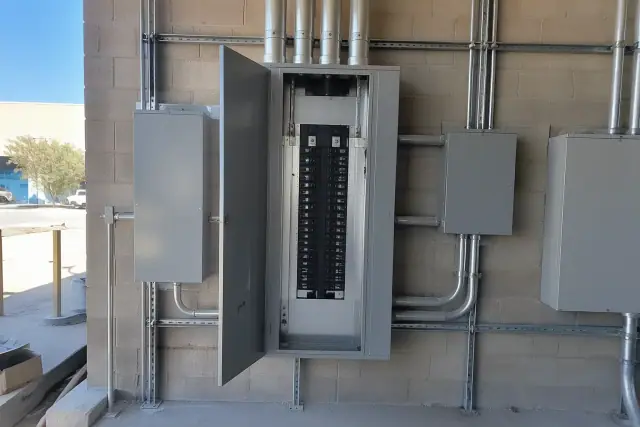
Industrial 400 amp commercial electrical panel upgrade in Phoenix, AZ, with heavy-duty conduit.

Commercial upgrades require a review of equipment loads, three-phase power needs, and switchgear. A commercial 400 amp project often ranges from $15,000 to $100,000 or more, with engineering and equipment requirements making it substantially different from a standard residential installation.

Request Estimate
Equipment and Service Routes

400 Amp Panel and Service Entrance Options

The service layout depends on the utility requirements and the route power takes into your property. We compare panel arrangements, overhead or underground conductors, and commercial metering needs during the site assessment.

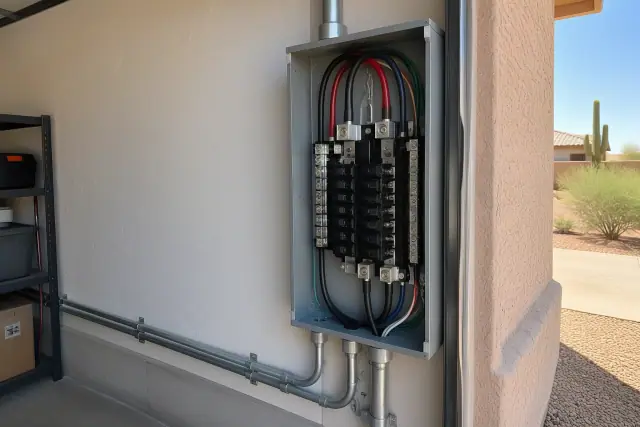
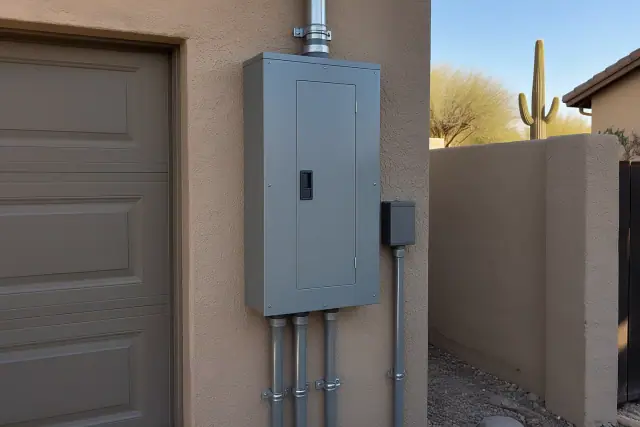
Single 400 amp main breaker panel on a stucco garage wall in Phoenix, AZ.

Single 400 Amp Main Breaker Panel

Where the utility requirements and property layout allow it, a single main breaker panel is one option for a 400 amp service. We check the enclosure location and the circuits you plan to add before recommending equipment.

  • Single main breaker panel arrangement.
  • Wall space assessed before equipment selection.
  • Working clearance reviewed at the proposed location.
  • Meter enclosure matched to utility specifications.
  • Future circuit needs included in the layout.
Request Estimate
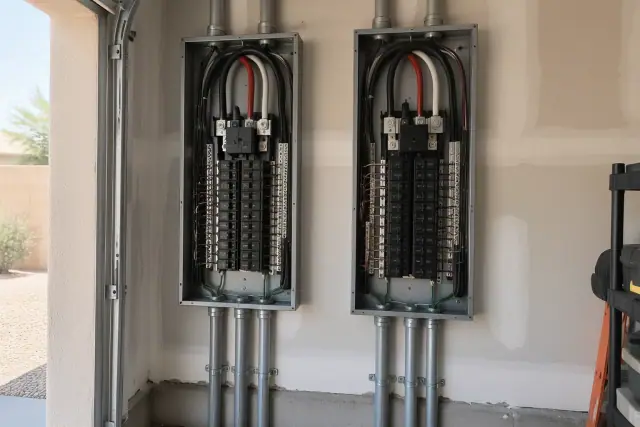
Dual 200 amp electrical panel upgrade with heavy gauge cables in a Phoenix, AZ garage.

Dual 200 Amp Panel Configuration

A dual 200/200 amp arrangement divides the service between two main breakers. We confirm the meter-main configuration with APS or SRP and assess how the layout fits the available space and planned circuits.

  • Two 200 amp main breakers.
  • Combined 400 amp service arrangement.
  • Utility metering compatibility checked in advance.
  • Circuit layout based on property requirements.
  • Panel availability considered during planning.
Request Estimate
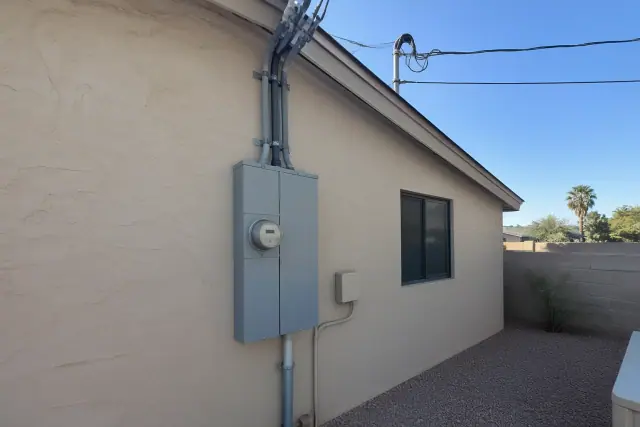
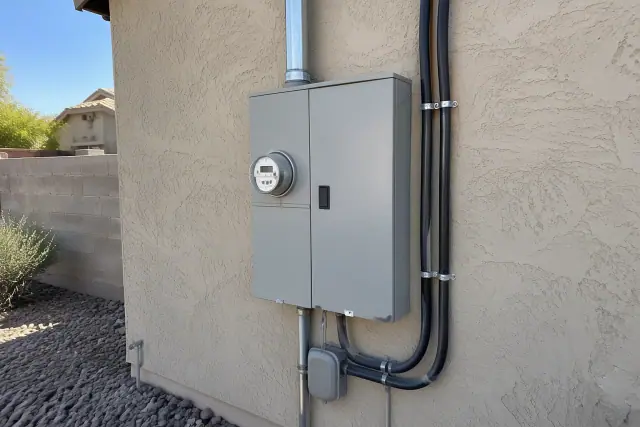
Overhead service entrance upgrade with new cables and meter box on a stucco wall in Phoenix, AZ.

Overhead Service Entrance Upgrade

For an overhead supply, the assessment includes the existing service drop, weatherhead, riser, and meter location. Riser height, material, and conductor routing affect both the proposed work and the price.

  • Existing service drop assessed.
  • Weatherhead condition reviewed.
  • Riser height checked against utility requirements.
  • Service conductor route planned.
  • Utility disconnect coordinated before replacement.
Request Estimate
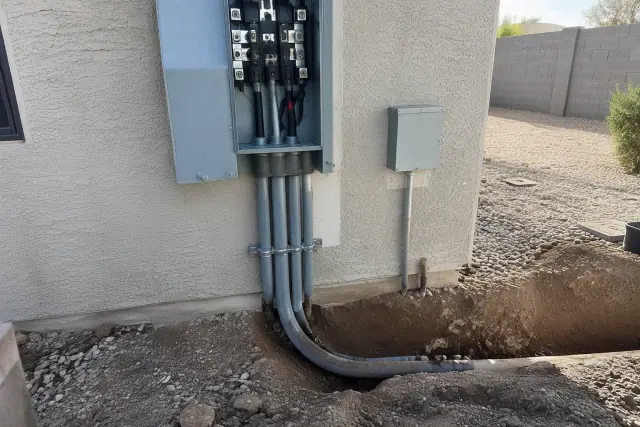
Underground service lateral upgrade and 400 amp service box on a stucco wall in Phoenix, AZ.

Underground Service Lateral Upgrade

An underground project starts with checking whether the existing lateral can be reused or needs replacement. Buried cable is roughly $21 per foot, while routing, trenching, and utility coordination affect the overall project scope.

  • Existing underground lateral assessed.
  • Conduit length included in the scope.
  • Trenching requirements identified.
  • Copper or aluminum conductor options evaluated.
  • Overhead-to-underground conversion planned when needed.
Request Estimate
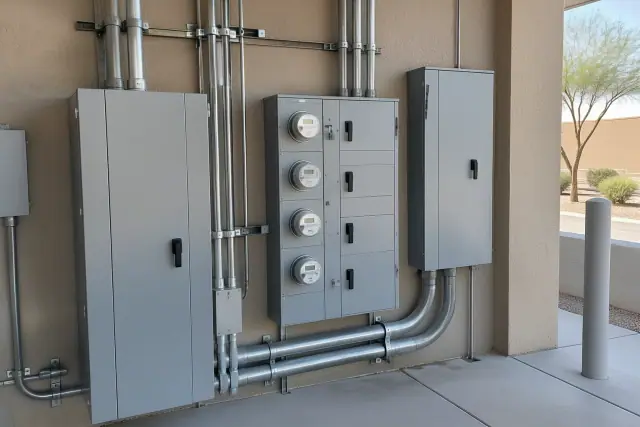
Commercial metering and switchgear installation for a 400 amp service upgrade in Phoenix, AZ.

Commercial Metering and Switchgear

Commercial service equipment must fit the proposed loads and utility metering arrangement. Three-phase equipment, switchgear, and a CT-rated meter cabinet may be part of the project, with engineering and equipment lead times considered before scheduling.

  • Three-phase power needs reviewed.
  • Switchgear requirements included in planning.
  • CT-rated metering evaluated where applicable.
  • Larger conductor space assessed.
  • Engineering and equipment lead times discussed.
Request Estimate
Assess Before You Upgrade

Choosing the Right Service Upgrade Approach

The recommendation should account for your present demand, planned additions, and existing service entrance. We assess those details before choosing equipment or setting the installation schedule, so the scope addresses the property rather than relying on panel size alone.

Load Calculations Before Recommendations

We start with a load calculation under NEC Article 220 and review the equipment you intend to add. That assessment helps determine whether a 200 amp upgrade is sufficient or whether the property calls for 400 amp service.

APS and SRP Coordination

We coordinate meter socket and riser specifications with Arizona Public Service or Salt River Project before installation. Our scope includes permit filing and inspection scheduling through the City of Phoenix Development Services Department or the applicable Maricopa County jurisdiction.

Installation Checks Under Load

We check lug torque against manufacturer specifications using a calibrated torque screwdriver. After energization, a thermal check under load helps identify hot spots at the main lugs and breaker connections.

Existing Problems, Planned Improvements

Why Choose Us for Your Service Upgrade?

We look at the condition of the existing equipment as well as the capacity you need. Our crews have replaced panels in Arcadia, Encanto-Palmcroft, and Sunnyslope and built 400 amp commercial services for retail buildouts near Camelback Corridor. The assessment connects visible symptoms, proposed additions, and service entrance limitations to a defined scope of work.

Schedule an Assessment

Main Breaker Tripping Under Normal Load

Repeated main breaker trips during ordinary household use call for an assessment of the connected loads and existing equipment. We review the demand before recommending a breaker repair, panel replacement, or larger service.

Warm or Discolored Panel Covers

Warmth or discoloration at a panel is a warning sign that needs an electrical assessment. Our installation checks address conductor sizing, rated connections, grounding, and torque specifications rather than treating a larger panel as the only answer.

Flickering Lights When Appliances Start

Lights that flicker as large appliances start are a reason to have the service and equipment assessed. Phoenix summer temperatures above 110 degrees can keep air conditioning running for extended periods, making cooling demand an important part of the load review.

Added Loads from a Casita or Home Addition

A detached ADU, garage conversion, or home addition can bring its own HVAC equipment and other electrical loads. We include those plans alongside pool equipment, EV charging, and workshop tools when calculating the service requirement.

Outdated Fuse Boxes and Legacy Panels

Homes from the 1950s through the 1970s in Sunnyslope, Maryvale, and parts of Central Phoenix may still have original 60 to 100 amp fuse boxes or early Federal Pacific and Zinsco panels. We assess replacement needs separately from capacity so the project addresses both equipment condition and future demand.

No Room for Additional Circuits

Limited circuit space can complicate plans for electric appliances, a workshop, or additional cooling. We assess the panel layout and service capacity together before deciding whether a subpanel, panel replacement, or service upgrade fits the work.

From Assessment to Energization

Our 400 Amp Service Upgrade Process

Most residential projects take two to four weeks from the initial visit to an energized panel once permit review, utility scheduling, and inspections are included. The sequence below shows how the assessment, equipment work, and approvals fit together.

01.

Assess Loads and the Existing Service

We review the appliances, cooling equipment, and additions you plan to support, then complete a load calculation. The site visit also covers the existing service drop or lateral, panel, meter enclosure, and grounding.

02.

Define Equipment and Quote the Scope

We choose the panel arrangement and identify meter, conductor, riser, and grounding work. Equipment and labor are itemized separately so you can see what drives the quote and discuss the payment structure before work begins.

03.

Arrange Permits and Utility Scheduling

We file the permit with the applicable city or county jurisdiction and confirm equipment requirements with APS or SRP. The utility disconnect and inspection schedule are coordinated before the service replacement proceeds.

04.

Replace the Service Entrance and Panel

With the utility disconnect arranged, we install the specified meter base, service conductors, disconnect, and panel equipment. Copper or aluminum service conductors are selected for the installation under NEC Article 230 requirements and applicable ampacity tables.

05.

Complete Grounding and Connection Checks

We complete the grounding electrode and bonding work under NEC Article 250 and check working clearances and connection torque. Copper is generally preferred for shorter runs and tighter terminations, while aluminum is often used for longer underground laterals where weight and cost matter.

06.

Finish Inspections and Check Under Load

We schedule the required local inspections and coordinate utility meter release before permanent power is restored. After energization, we perform the thermal check at the main lugs and breaker connections to assess the installation under load.

Plan Your Added Electrical Loads

Schedule a 400 Amp Service Assessment

Tell us about the cooling equipment, EV chargers, pool, workshop, or addition you are planning. Phoenix Electrical Panel Upgrades will assess the existing service entrance and explain the equipment, utility coordination, and work behind your quote.

Capacity, Costs, and Scheduling

400 Amp Service Upgrade FAQs

These answers cover installation scope, equipment costs, house wiring, and the steps involved in a Phoenix service upgrade. A site assessment determines how those details apply to your property.

Call About Your Upgrade

Residential projects typically start around $5,800 and run to $14,000 or more, depending on the service entrance, riser, meter enclosure, and underground work. Commercial upgrades often range from $15,000 to $100,000 or more because of three-phase equipment, switchgear, and engineering requirements. We assess the property before quoting and explain the work that drives the price.

We begin with a load calculation and an assessment of the service entrance, meter, and grounding. After arranging permits and the APS or SRP disconnect, we install the specified conductors, meter enclosure, panel equipment, and grounding connections. Local inspections and utility meter release are coordinated before permanent power is restored.

Consider an assessment when adding major loads such as multiple EV chargers, a pool, an ADU, or an addition with its own HVAC equipment. Planning solar with battery backup or a workshop is also a reason to review service capacity. Main breaker trips or an insurance inspection that flags the existing panel call for an equipment assessment, but the load calculation determines the appropriate service size.

A single 400 amp main breaker panel or dual 200/200 amp split configuration typically costs $1,800 to $4,000 for the equipment alone. That excludes installation labor, service conductors, the meter enclosure, and permits. We itemize equipment and labor separately so the panel price is distinct from the full installed project.

In most cases, existing branch circuit wiring can remain if it is in good condition and code-compliant. The service upgrade replaces the panel and the service entrance, meter, or grounding components included in the scope. We inspect the existing circuits and identify any separate wiring work during the assessment.

There is no strict square footage cutoff. Homes over 3,500 to 4,000 square feet with multiple HVAC zones, electric ranges, pool equipment, and EV charging commonly warrant a 400 amp service assessment. A smaller home with a heavily equipped workshop or casita can also need additional capacity, so the connected and planned loads matter more than floor area alone.

If the property has a Federal Pacific Stab-Lok or Zinsco panel and also needs more capacity, we can assess both needs within one project. Combining replacement and service work can reduce overlapping labor, permit work, and disconnect arrangements. Equipment condition still needs attention even when a load calculation shows that 400 amp service is unnecessary.

Yes, whole house surge protector installation is part of our service offering and is standard practice on most of our 400 amp upgrades. It is installed at the new panel, with the scope discussed during the assessment. Arizona monsoon conditions and utility grid fluctuations make surge protection a relevant consideration for sensitive electronics and appliances.

A straightforward residential upgrade with an accessible service entrance typically takes one to three days of on-site work. A full underground lateral upgrade or overhead-to-underground conversion can extend to one to three weeks when trenching and utility coordination are included. The overall schedule also includes permit review, inspections, and equipment availability.

Riser height, conduit length, meter socket compatibility, and the amount of existing equipment that can be reused affect the quote. A full service entrance rewire with new grounding typically adds $3,500 to $5,500 and one to three weeks of lead time for utility coordination. We identify that work during the assessment so it is included in the project scope.

A 400 amp upgrade usually requires a new meter enclosure as well as panel work. The enclosure must accommodate the specified conductors and meet APS or SRP metering requirements. Commercial projects may also require a CT-rated meter cabinet, which we evaluate as part of the service design.

The arrangement may use a single 400 amp main breaker panel or a dual 200 amp configuration. We confirm utility requirements before recommending either option and consider wall space, equipment availability, and future circuits. The property assessment determines the appropriate layout.

We discuss the scope and payment structure during the estimate; ask directly about available financing options for your project. Combining a needed legacy panel replacement with the capacity upgrade can reduce overlapping work. Scheduling outside peak summer may also help with utility coordination, depending on crew availability.