Proudly serving Phoenix, Scottsdale, Mesa, Glendale, Chandler, Tempe & surrounding areasCall or Text 24/7: 480-210-5203
Wide drone view of suburban neighborhoods with red tile roofs and desert landscaping in Phoenix, AZ.

Circuit Breaker Repair & Replacement in Phoenix, AZ for Tripping Circuits & Failures

Phoenix Electrical Panel Upgrades provides circuit breaker repair and replacement in Phoenix, AZ. We diagnose repeated trips, replace failed breakers, and assess whether your panel needs more capacity. Our services include 200 and 400 amp upgrades, subpanel installation, and replacement of obsolete Federal Pacific and Zinsco panels.

Summer temperatures of 110°F or higher put sustained stress on breakers as air conditioners, pool pumps, and evaporative systems run. Heat and repeated expansion can wear contacts and loosen electrical connections. We inspect the breaker, its connections, and the circuit load before recommending work. You receive upfront pricing so you can decide how to address the problem.

Our licensed electrical contractors use breakers matched to the panel and coordinate service disconnects with your utility when needed. Call us about a breaker that will not reset or a panel showing signs of heat damage.

Phoenix Electrical Panel Upgrades provides circuit breaker repair and replacement throughout Phoenix, Scottsdale, Tempe, Mesa, Glendale, Chandler, and greater Maricopa County.

★ ★ ★ ★ ★4.9/5 Customer Satisfaction · 29 Years of Electrical Experience · 2,000+ Electrical Projects Completed · Licensed, Bonded & Fully Insured · Serving Homes & Businesses Valleywide

Circuit Breaker Repair Options & Benefits

What Does Circuit Breaker Repair Involve?

A tripping breaker can signal an overloaded circuit, a damaged connection, or a failed breaker. We inspect the panel's age, brand, and condition and check the electrical demand before deciding which repair is appropriate.

Repair work can address loose lugs, damaged wire terminations, or connection problems around the breaker. The breaker itself is not a field-repairable device; an internally failed or physically damaged unit needs replacement.

A single faulty breaker does not automatically mean the entire panel needs replacing. An obsolete panel, damaged bus bars, or insufficient service capacity can make broader replacement the more practical choice.

Benefits of a Properly Matched Breaker

The right repair addresses the reason for a trip and preserves the circuit protection your wiring needs. Our assessment connects the symptom to the load, breaker type, and panel condition.

  • Overload protection matched to the circuit wiring
  • Diagnosis before replacing a breaker
  • Correction of loose or damaged terminations
  • Replacement breakers compatible with the panel bus
  • Capacity planning for HVAC, EV charging, and pool equipment
  • Clear guidance on obsolete panel replacement
  • Utility coordination for main breaker and service work
  • Upfront pricing before repairs begin
Repair and replacement

Breaker Repair & Panel Services

From a single lighting circuit to a commercial service entrance, we assess the equipment involved and the load it must support. These services address failed breakers, aging panels, and demand that has outgrown the existing electrical supply.

Circuit Breaker Troubleshooting

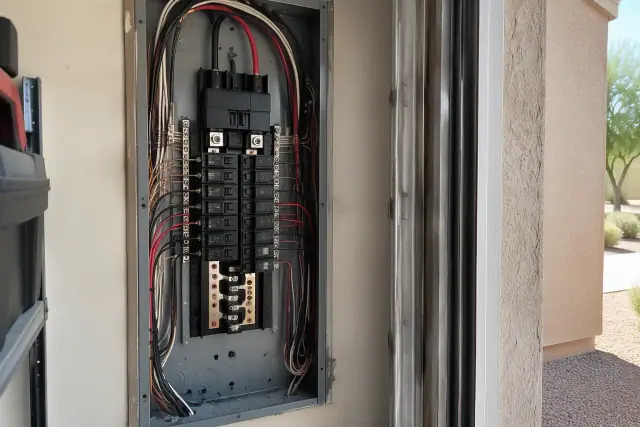
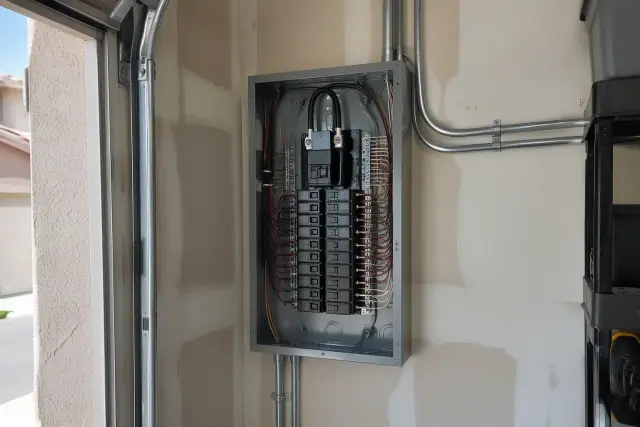
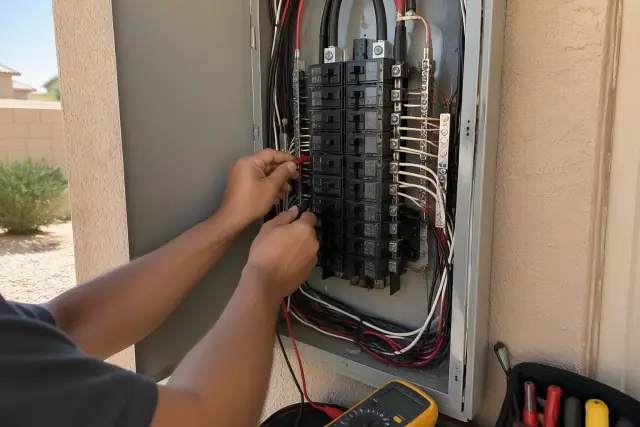
Technician troubleshooting an open electrical panel with internal wiring harnesses in Phoenix, AZ.

We inspect breaker connections, circuit demand, and signs of heat damage to distinguish a failed device from a wiring or load problem. Loose lugs, corroded contacts, and damaged terminations can make an otherwise working breaker appear faulty.

Request Estimate

Single, Double & Main Breaker Replacement

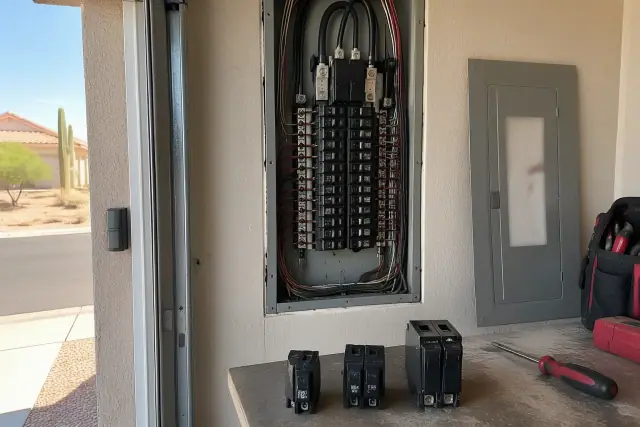
Circuit breaker replacement in a residential garage in Phoenix, AZ.

We replace damaged or failed breakers after checking amperage, interrupt rating, and panel compatibility. Lighting circuits, large appliances, and the main service require different breaker configurations; main breaker work also needs a utility disconnect.

Request Estimate

200 & 400 Amp Service Upgrades

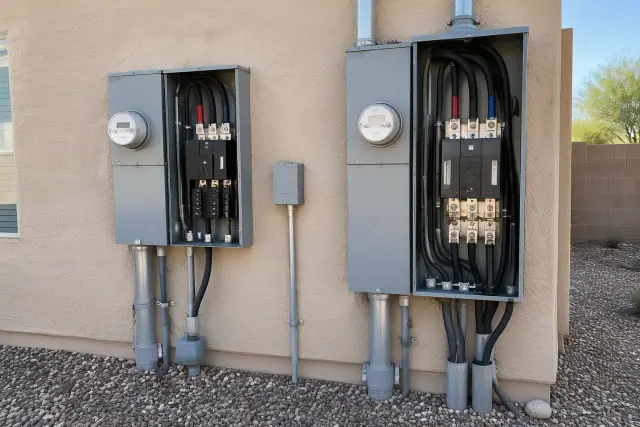
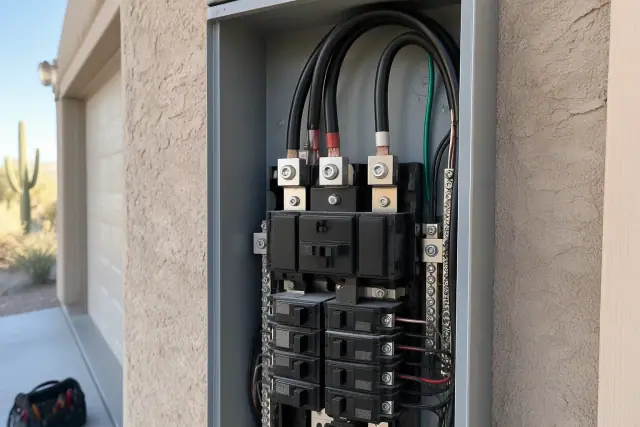
Exterior meter combo with service cables on a stucco wall in Phoenix, AZ.

Homes built in the 1960s and 70s may still have 60 or 100 amp service that struggles with today's electrical demand. A 200 amp upgrade can support a home with central air, an electric range, and a dryer, while larger homes with EV chargers, casitas, and workshop subpanels may need 400 amp service. We use NEC load calculations to size the upgrade.

Request Estimate

Subpanel Installation

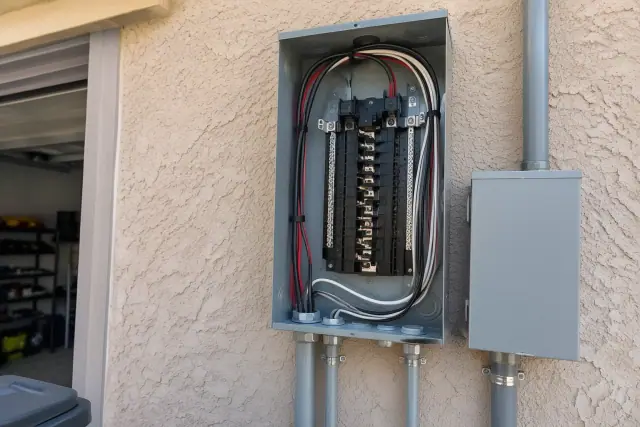
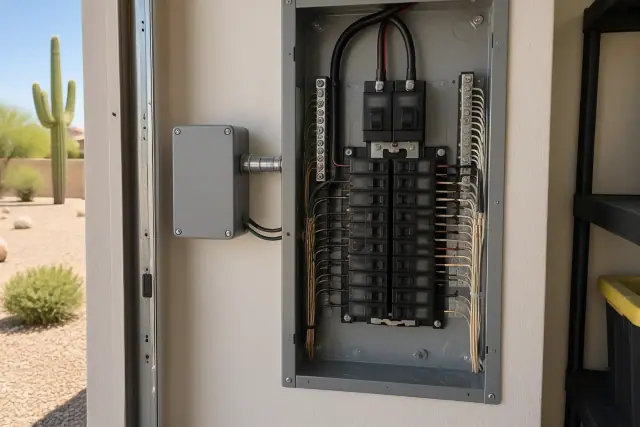
Contractor photo of a subpanel installation on a stucco garage wall in Phoenix, AZ.

A subpanel provides circuit space for a room addition, guest casita, workshop, or backyard kitchen while keeping the main service's available capacity in view. We plan feeder sizing and placement, including working clearance under NEC 110.26 and nearby utility equipment.

Request Estimate

Federal Pacific & Zinsco Panel Replacement

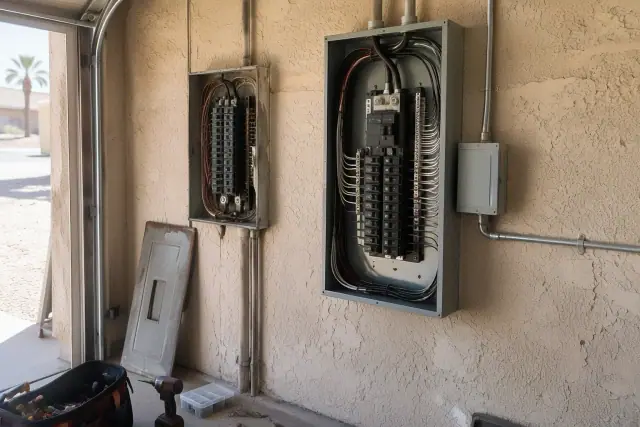
Federal Pacific and Zinsco panel replacement in a Phoenix, AZ residential garage.

Older properties in central Phoenix, Encanto, and Tempe may still have Federal Pacific Electric or Zinsco Sylvania equipment. Stab-Lok breaker trip failures and Zinsco bus connection damage warrant assessment of the whole panel. We replace obsolete equipment with supported panel systems sized for the property's load.

Request Estimate

Commercial Electrical Panel Upgrades

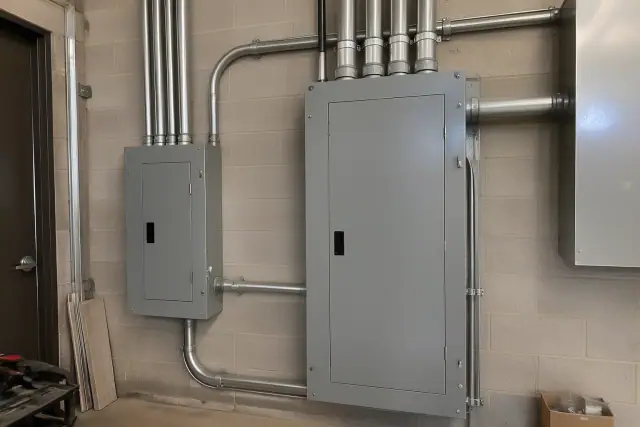
Commercial electrical panel upgrade with heavy-gauge wire raceways in a utility room in Phoenix, AZ.

Businesses along the Camelback Corridor and in industrial parks near Sky Harbor need capacity based on their actual equipment schedules. We plan commercial panel upgrades and three phase service for compressors, motors, and manufacturing equipment, coordinating utility work and scheduling shutdowns around operating hours where possible.

Request Estimate
Equipment and protection

Breaker Types & Related Electrical Options

Breaker configuration depends on the circuit it protects. We also assess fuse box conversion and whole house surge protection when the condition of the existing equipment or the property's needs call for those services.

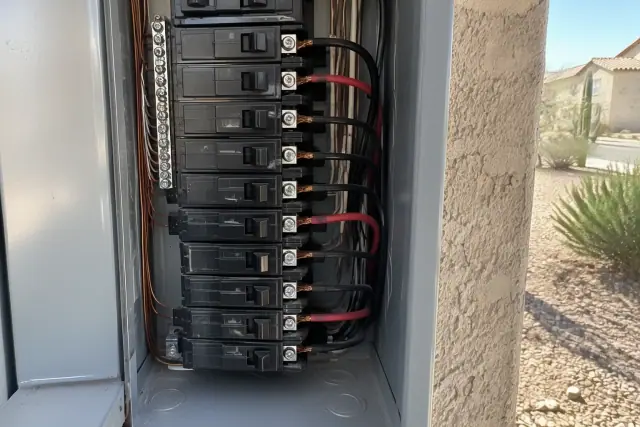
Single pole breakers inside a residential electrical panel during a repair in Phoenix, AZ.

Single Pole Breakers

Single pole breakers commonly protect lighting and receptacle circuits. On a modern panel, a standard replacement typically takes under an hour once the correct amperage and interrupt rating are confirmed.

  • 15 and 20 amp lighting and receptacle circuits
  • Amperage matched to the protected wiring
  • Interrupt rating checked before replacement
  • Panel brand and bus compatibility reviewed
  • Loose connections checked during diagnosis
Request Estimate
Double pole breakers and copper wires inside an electrical panel in a Phoenix, AZ garage.

Double Pole Breakers

Double pole breakers serve 240-volt loads such as HVAC condensers, dryers, and ranges. Long cooling cycles make the air conditioning circuit an important part of summer breaker troubleshooting.

  • HVAC condenser circuit protection
  • Electric dryer circuits
  • Electric range circuits
  • Heat cycling and contact wear assessment
  • Replacement matched to the circuit and panel
Request Estimate
Main breakers mounted on a stucco garage wall during a circuit breaker repair in Phoenix, AZ.

Main Breakers

The main breaker controls power to the whole panel, so an internal failure can interrupt service throughout the property. Replacement is planned with a temporary utility disconnect.

  • Whole-panel power interruption assessment
  • Downstream fault versus breaker failure diagnosis
  • Utility disconnect arranged before replacement
  • Meter base condition considered for service work
  • Reconnection coordinated with APS or SRP
Request Estimate
Technician photo of a fuse box conversion and circuit breaker repair in Phoenix, AZ.

Fuse Box Conversion

Homes built before 1970 around downtown Phoenix and the Melrose district may still use screw-in fuses and 30 to 60 amp panels. Conversion replaces the fuse-based equipment and addresses grounding, bonding, and applicable circuit protection as part of the service work.

  • Identification of screw-in fuse equipment
  • Modern breaker panel replacement
  • Service capacity reviewed for current loads
  • Grounding and bonding brought into the work scope
  • AFCI and GFCI protection addressed during conversion
Request Estimate
Whole house surge protection installed in a residential garage in Phoenix, AZ.

Whole House Surge Protection

Lightning activity from July through September and utility switching during peak cooling demand can send voltage spikes into the home. A panel-mounted surge protective device helps protect HVAC control boards, refrigerators, and connected electronics.

  • UL 1449 rated surge protective devices
  • Installation at the panel or meter base
  • Two open breaker spaces planned for the installation
  • Dedicated grounding connection
  • Protection against transient voltage spikes
Request Estimate
Diagnosis before replacement

Choosing the Right Breaker Repair Approach

The repair recommendation should account for the circuit's actual demand and the condition of the equipment. We explain whether a connection repair, compatible replacement breaker, subpanel, or service upgrade addresses what we find.

Licensed Electrical Contractors

Our contractors work under Arizona Registrar of Contractors requirements. We follow the National Electrical Code as adopted and amended locally, and plan permits and inspection through the City of Phoenix Development Services Department for applicable work.

Compatible Parts & Specified Torque

We use UL 489 listed breakers matched to the panel's bus design. Calibrated torque wrenches let our crews tighten breaker lugs to manufacturer specifications, addressing a detail that matters when connections repeatedly heat and cool.

Clear Pricing Before Work

Breaker type, panel brand, and accessibility shape the quote. We explain the recommended scope and provide a firm price before starting, including when specialty AFCI or GFCI breakers or difficult panel access affect the work.

Signs your panel needs attention

Get to the Cause of Breaker Problems

Repeated trips, buzzing, discoloration, or a burning smell deserve attention. Our inspection looks at heat, electrical demand, connections, and equipment condition so the repair addresses the cause of the symptom.

Request a Panel Inspection

Heat-Worn Contacts

Garage and attic panel locations can exceed 120°F in summer. Sustained heat and thermal cycling wear breaker contacts as cooling equipment runs, making the panel's operating environment part of the diagnosis.

Loose or Corroded Connections

Expansion and contraction can loosen lug connections, while monsoon-season humidity can contribute to corrosion. We inspect these connection points because a poor termination can disrupt a circuit even when the breaker itself still works.

Repeated Trips Under Load

A breaker that trips during ordinary use may be responding to excessive demand. We compare the circuit's load with its rating and assess load redistribution or additional circuits when the wiring is being asked to carry too much.

A Breaker That Will Not Reset

A breaker that refuses to stay reset may have failed internally or be responding to a fault downstream. If it trips immediately again, stop repeated reset attempts and call a licensed electrician for diagnosis.

Burning Smells or Discoloration

A burnt-plastic or ozone smell, visible discoloration, and panel buzzing can indicate heat damage or an electrical fault. These signs need prompt professional attention; a breaker that fails to interrupt an overload can allow wiring to overheat.

Obsolete or Damaged Panel Equipment

Discontinued breakers can be difficult to match to an older bus design, and physical damage may extend beyond one device. A Zinsco breaker fused to its bus connection or multiple failing breakers calls for evaluating panel replacement.

From inspection to completion

Our Circuit Breaker Service Process

We start with the condition of your panel and the symptoms you describe. The findings determine the repair scope, parts, price, and any permit or utility coordination needed.

01.

Inspect the Panel & Symptoms

We check panel age and brand, look for heat damage, and review which circuits trip. This helps distinguish an isolated breaker issue from a wider problem with the panel.

02.

Check Connections & Circuit Load

We examine lugs, bus contacts, and wire terminations and compare demand with the circuit rating. For capacity upgrades, NEC load calculations account for the equipment the property needs to run.

03.

Explain the Scope & Price

We explain whether the work involves connection repair, breaker replacement, or a broader upgrade. You receive pricing before work begins, with breaker type, access, and panel condition reflected in the scope.

04.

Arrange Permits & Utility Work

We pull permits before opening a service entrance and coordinate meter base work, meter box replacement, and service disconnects with Arizona Public Service or Salt River Project. Utility scheduling is part of planning main breaker and service upgrades.

05.

Install Compatible Equipment

We fit the appropriate breaker or panel equipment and use manufacturer lug torque specifications. The selected components must suit the bus design, circuit wiring, and required electrical load.

06.

Coordinate Inspection & Reconnection

For work requiring inspection and utility reconnection, we coordinate those steps around the installation. Commercial shutdowns are sequenced within a defined work window where possible to limit disruption.

Discuss your breaker problem

Schedule a Circuit Breaker Inspection

Tell us which circuit is tripping, whether the main breaker will reset, and any panel brand information you already have. We can assess the problem and explain the repair or replacement options with pricing before work begins.

Questions about your panel

Circuit Breaker Repair & Replacement FAQs

Find answers about breaker life, replacement costs, electrical capacity, and the difference between repairing a connection and replacing equipment.

Call About Breaker Service

For standard continuous-load sizing, the 80% rule limits a breaker's continuous load to 80% of its rating; a 20 amp breaker therefore serves 16 amps of continuous load. We check circuit demand during an inspection. If demand is consistently near that limit, load redistribution or a properly planned subpanel may be appropriate.

The breaker itself is not a field-repairable device. Loose lugs, corroded contacts, or damaged wire terminations around it may be repairable, but an internally failed breaker needs replacement. We diagnose the cause before quoting the work.

Yes, breaker replacement involves electrical hazards inside the panel and requires correct component selection. Phoenix Electrical Panel Upgrades uses licensed electrical contractors to assess compatibility and complete the work to applicable NEC requirements. Permits and inspection are addressed for work that requires them.

Typical Phoenix market costs range from around $175 for a single standard breaker swap to $2,500 for an entire panel's worth of breakers replaced in one visit. Breaker type, panel brand, and accessibility affect the price. AFCI and GFCI devices cost more than standard thermal-magnetic breakers, while obsolete parts and tight attic or crawlspace access can add expense.

Circuit breakers typically last 20 to 30 years under normal residential conditions, while some panel systems function reliably for 25 to 40 years overall. Low-voltage breaker failure figures are roughly 2% annually during the first 15 years, about 5% between years 16 and 25, and 12% after 25 years. These are general figures, not a prediction for an individual breaker, and Arizona heat can shorten its useful life. Inspection every few years can help identify wear.

Not on the same wiring simply to stop tripping. A 20 amp circuit using 12-gauge wire must retain the protection appropriate to that wiring; installing a 30 amp breaker can allow the wire to overheat. We check the load and circuit design to identify a suitable correction.

Stop repeated reset attempts and contact a licensed electrician, especially if the breaker trips immediately again. The cause may be a downstream fault or an internal breaker failure. If main breaker replacement is needed, we coordinate a temporary service disconnect with the utility.

An obsolete Federal Pacific or Zinsco panel, a fuse box, insufficient service capacity, or several failing breakers can point toward replacement. We assess the panel's age, condition, brand, and electrical demand before recommending that scope. An isolated fault in a suitable modern panel may only need a connection repair or compatible breaker replacement.

A 200 amp service entrance upgrade in Phoenix generally runs from $2,500 to $4,500. Meter base condition, mast height, and the extent of service entrance work affect that range. We assess those details and provide the price before starting.

Most residential subpanel installations are completed in a single day of physical work, including wiring and feeder breaker sizing. Permit and inspection scheduling are handled around that installation. The layout must also accommodate working clearance and nearby utility equipment.

The decision depends on calculated demand. Pool equipment, EV chargers, casitas, and workshop subpanels can increase the load enough to warrant 400 amp service. We use NEC load calculations to evaluate the property's equipment before recommending capacity.

Independent testing of Federal Pacific Stab-Lok breakers has documented failures to trip during overloads. Zinsco and Sylvania-Zinsco bus connections can overheat and melt, sometimes fusing a breaker to the bus. Those conditions call for assessing the panel as a whole rather than assuming one replacement breaker resolves the problem.

Yes, we provide commercial panel upgrades and industrial electrical panel repair. Capacity planning uses the actual equipment schedule, including compressors and motors, and three phase upgrades require utility coordination before construction. We arrange work around operating hours where possible and sequence shutdowns to limit downtime.