Complete Installed Cost
Most Phoenix homeowners pay $1,200 to $3,500 for a complete, permitted, inspected installation. Compare the full scope from the feeder breaker to the labeled circuits, including labor, wiring, and fees.
Phoenix Electrical Panel Upgrades estimates subpanel installation after a load calculation and a walk-through of the existing service. In Phoenix, installation typically costs $800 to $3,500, with amperage, feeder distance, and permit scope shaping the total. Understanding those costs helps you compare complete installations before approving work.
Most Phoenix homeowners pay $1,200 to $3,500 for a complete, permitted, inspected installation. Compare the full scope from the feeder breaker to the labeled circuits, including labor, wiring, and fees.
After amperage, distance from the main panel is the biggest cost driver. Each additional 10 feet of trenching or conduit adds roughly $150 to $400; caliche-heavy soil in the East Valley and North Phoenix can make excavation harder.
An electrician checks the existing service capacity and planned loads before sizing the feeder. Confirm that assessment and the route to the new panel before comparing itemized project quotes.
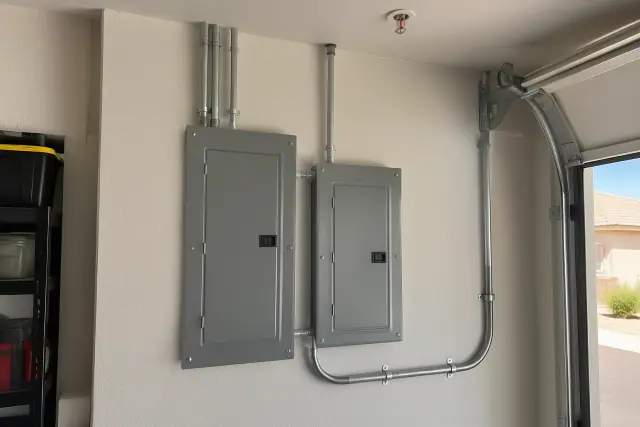
A short feeder run makes an attached garage one of the less expensive installation settings. These jobs often cost under $1,500.
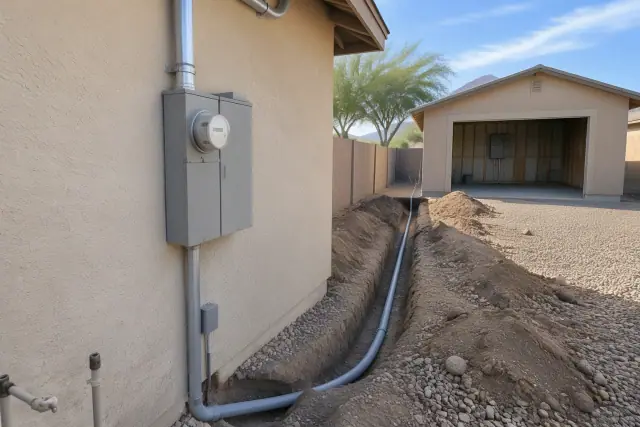
A detached garage installation typically costs $2,000 to $4,000 once trenching, conduit, and a disconnect are included. The route between buildings helps explain the difference in price.
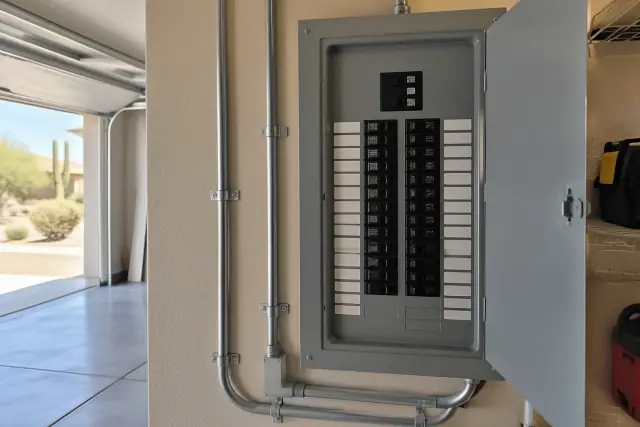
A completed installation includes labeled circuits and a fitted panel cover. Final inspection is part of the project scope to confirm with the electrician.
Standard residential labor runs $75 to $150 per hour; commercial or after-hours work can reach $225 per hour. A simple garage job may take 4 hours, while a detached building 60 feet away with trenching can take 10 to 14 hours.
The enclosure costs $60 to $300 depending on size and selection. A 20-slot, 100 amp panel with breakers typically adds $250 to $450 to materials before labor; feeder wire, conduit, and connectors are additional components.
Residential subpanel permit fees in Phoenix typically run $75 to $250. Confirm the current fee with the City of Phoenix Development Services Department and ask whether inspection is included in the quoted amount.
A rough cost breakdown reserves 10 percent for site conditions. Ask how difficult soil, access, or changes to the feeder route would affect the price before approving the estimate.
| Subpanel Size | Typical Installed Cost | Common Project Scope |
|---|---|---|
| 60 amp | $800 to $1,600 | Shed, workshop, or small addition. |
| 100 amp | $1,200 to $2,500 | Garage, ADU, or guest casita. |
| 200 amp | $2,000 to $4,500 | Whole detached structure or home addition. |
| 400 amp | $3,500 to $8,000 or more | Commercial or large accessory building with engineered load calculations. |
Run length, trenching, and panel selection change the installed price. Compare quotes with the same feeder route, grounding, disconnect, permit, and inspection scope.
The panel enclosure is only part of the job. A complete quote accounts for the feeder breaker, appropriately sized conductor, conduit, connectors, grounding work, circuit breakers, labeling, and inspection. Wiring alone typically costs $300 to $1,200; the physical panel and main breaker installation labor is usually $400 to $900 of the project total. These are components of the quote, so check what is already included before adding allowances. The work starts with a load calculation and permit planning, then proceeds through feeder installation, circuit labeling, and final inspection before energizing.
Detached installations combine a longer feeder route with excavation, conduit, grounding, and a disconnect. A separate grounding electrode system adds $200 to $500, and a disconnect adds $150 to $400 in material and labor costs; confirm whether the installation quote already includes them. Longer runs also require the electrician to evaluate voltage drop and conductor size. Exterior exposure to Phoenix summer heat and difficult soil can affect the route and conduit work. Give the electrician the proposed location, planned loads, and access details so the quote reflects the property.
Can a 100 amp service feed a 100 amp subpanel? The panel rating alone does not establish available capacity: a load calculation must account for HVAC, water heating, kitchen loads, and the new circuits. That assessment determines whether the existing service can support the addition or a 200 amp service upgrade should be considered. How many breakers fit a 60 amp subpanel? Common enclosures have 8, 12, or 16 slots; the enclosure rating determines breaker options, while the feeder capacity limits the load. Can DIY installation reduce the cost? Wire sizing, grounding, and breaker compatibility errors can require costly corrections. Confirm owner-work eligibility and permit requirements with the local jurisdiction before deciding who will perform the installation.
Share the planned circuits, proposed panel location, and whether the work serves an attached or detached space. An on-site assessment can confirm the existing service capacity, feeder route, and itemized installation cost before work begins.