Obtain the Electrical Permit
Increasing service capacity to 200 amps requires a permit. A small panel footprint or a short installation does not remove the permit requirement.
Yes, a 200 amp service upgrade in Phoenix requires an electrical permit, and Phoenix Electrical Panel Upgrades explains how that requirement affects your project. The permit and inspection cover the service equipment, conductor sizing, and grounding that make the added capacity usable. Confirm the application, utility arrangements, and final inspection before scheduling the work.
Increasing service capacity to 200 amps requires a permit. A small panel footprint or a short installation does not remove the permit requirement.
A higher-capacity panel is only part of the job. The load calculation, meter equipment, service conductors, and grounding must be evaluated together.
Confirm who schedules the inspection and handles any corrections. Utility coordination and inspection approval are separate steps that both belong in the project plan.
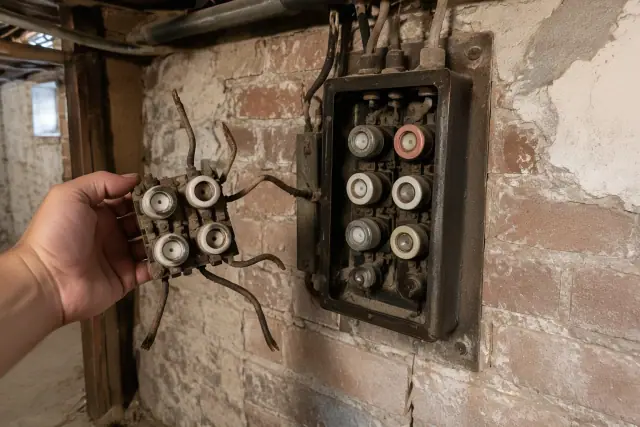
An older fuse service helps explain why adding capacity can involve more than a new panel. Have an electrician evaluate the existing service equipment before defining the upgrade.
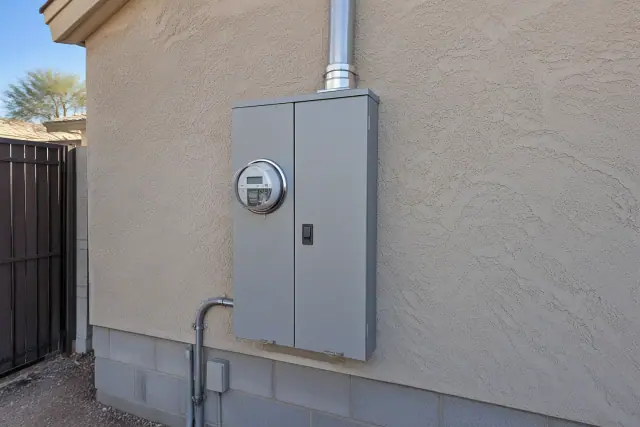
The meter and main panel must be considered together when planning the permitted work. Meter replacement or relocation can change the installation scope and utility schedule.
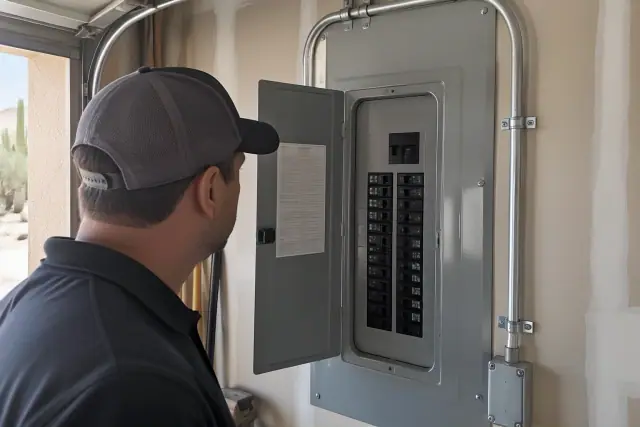
Clear circuit labels help the inspector identify the circuits served by the new panel. Final checks also cover breaker sizing, grounding, bonding, and working clearance.
Confirm which building department serves the address. A Phoenix application is separate from the process for a property in Scottsdale, Tempe, Mesa, Glendale, Chandler, or unincorporated Maricopa County.
Central air conditioning, electric water heating, and future EV charging belong in the load calculation. Original 100 amp service may need reassessment when kitchen or bathroom remodeling adds appliance circuits.
The utility disconnect and reconnect can drive the overall schedule even when installation is brief. Confirm the meter work and appointment sequence before committing to a work date.
If the inspector identifies an issue, complete the correction and arrange re-inspection. A correction notice is a step toward approval, not a reason to leave the permit unfinished.
| Project stage | What to confirm | Record or arrangement |
|---|---|---|
| Define the upgrade | Identify the electrical demand and the panel and meter locations. | Load calculation and site plan for the application. |
| Obtain the permit | Submit the scope to the building department responsible for the property. | Issued electrical permit before installation. |
| Coordinate the utility | Arrange the disconnect, any meter work, and reconnect with the serving utility. | Confirmed utility arrangements matched to the work schedule. |
| Complete inspection | Have labeling, breaker sizing, conductors, grounding, and bonding checked. | Inspection result and any required corrections. |
| Close out the permit | Complete corrections and re-inspection when required. | Final inspection approval for the property records. |
The permit covers changes to the main panel, meter equipment, service entrance conductors, and grounding system under the locally adopted National Electrical Code, NFPA 70. A load calculation accounts for existing equipment and planned additions so the service is sized for the home. In neighborhoods such as Encanto, Sunnyslope, and Maryvale, homes built before the 1980s may have older equipment that needs closer evaluation. Inspectors check conductor and breaker sizing, bonding, grounding, labeling, and working clearance; double-tapped breakers or undersized conductors can require corrections. The inspection is a check on the completed installation, not simply a receipt for the permit fee.
Standard panel upgrades in the Phoenix market typically run $1,000 to $5,000. A full service upgrade with meter equipment, service entrance cable, and grounding typically runs $2,500 to $6,000 for most single-family homes. Larger properties, additions, or an ADU subpanel can push the project toward $8,000 to $12,000, depending on trenching and conductor length. Residential permit fees are generally $50 to $150, but confirm the current fee for the actual scope and whether the written estimate includes it. Compare labor, materials, utility coordination, inspection scheduling, and any wiring corrections together; a panel-only price may omit work needed for the complete service upgrade.
Does the whole house need rewiring? Usually not: existing branch circuits can remain if their condition and sizing are suitable, although aluminum wiring or other defects may need evaluation and corrections. Can a homeowner obtain the permit? An owner-builder route may be available, but eligibility, code compliance, inspection, and utility requirements still apply; confirm the arrangement with the building department. How quickly is a permit issued? Straightforward residential applications may be processed quickly, while added work can require review; permit issuance does not set the utility or installation date. What if the upgrade was already done without a permit? Ask the building department how to document and inspect it. Corrective work or opening concealed work may be necessary, and missing approval can complicate a sale.
Share the property location, existing service size, and any planned equipment additions with Phoenix Electrical Panel Upgrades. Request a written estimate that identifies the panel and meter work, permit fee, utility coordination, and inspection responsibilities before installation.